Monday, April 4, 2022

On New Growth Theory

by A. Salces Cajes, PhD

There is no single formula for development. Economic development is not just about infrastructure and economic activities, but also covers knowledge, institutions, and culture. The new growth theory underscores the role of ideas in promoting economic growth. The proper implementation of good ideas can increase the country’s total productivity. Innovation serves as a catalyst to hasten the occurrence of development, and  innovation can be used to offset diminishing returns.  Indeed, sound ideas are part of human capital. Thus entrepreneurial ability, as a form of human capital, can help accelerate the process of economic development.

Structural changes and better economic outcomes can also be fostered by scientific ideas and rationality. That is why the importation of ideas is generally accepted as a strategy to stimulate economic development. However, ideas are an insufficient, although a necessary, condition for development. Bad ideas have wreaked havoc on the economies of many nations. Hence, the rejection of bad ideas is as important as the adoption of good ideas.

The story of economic development is paved with good and bad ideas. This is clearly demonstrated by the experiences of several socialist countries. In the case of the Philippines, the infusion of liberal ideas eventually awakened the consciousness of the natives about the bad economic situation they had after more than three centuries of Spanish domination. The lessons that the Ilustrados gained, by visiting and studying in other countries, enabled them to distinguish between right and wrong political and economic ideas.

The post-World War II Philippines was generally a poignant reminder of the failures of the import-substitution industrialization. This idea was adopted despite the fact that it was meant for industrial countries. To some extent, import-substitution industrialization produced some benefits, such as the development of local industries. However, in the long run, it became outdated and obsolete compared to what our Asian neighbors have adopted. Thus, the abandonment of unsound ideas is as good as the reception of rational ideas.

In the end, good ideas are like appropriate technologies. They have to be tested and analyzed to ensure that they fit the context of the place where they are to be planted. During my humble experiences in cooperative development, I have first-hand knowledge of the fact that a model that works in one cooperative won’t work when transplanted to another cooperative. There are several factors to be considered, such as the culture of the cooperative members and officers, their risk appetite, the type of business they are into, the supplies of raw materials, infrastructure support, access to funding and coaches, etc.

Sunday, January 16, 2022

On the Colonial Origins of Comparative Development

by Alan S. Cajes, PhD

Institutions that protect property rights and provide equitable policies are likely to promote meritocracy, thus invest more in physical and human capital development as drivers for increased income. Such institutions, at least in previously colonized countries, persist because the colonizers were able to settle. As such, they replicated their European institutions that promote ownership of private property, as well as checks and balance in government. The models of this approach are Australia, New Zealand, Canada, and the United States.

The same institutions are not likely to be established in colonized countries that discouraged the colonists to settle. What the colonists set up in the counties where they encountered high death rates, for instance, were extractive institutions that are still persisting. An example of such extractive institutions was exemplified by the Belgian colonization of the Congo – ownership of private property was not protected, there were no checks against government expropriation, and the institutions became instruments for the transfer of wealth from the colony to the colonizer.

The quality of institutions is important for the development and prosperity of national economies. The authors cited the different levels of well being between the North and South Korea, as well as the East and West Germany where one country stagnated due to extractive institutions that harbor central planning and collective ownership, while the other has high income driven by free market capitalism. 

Institutions play a critical role in the success or failure of nations. In colonized countries like the Philippines, extractive institutions still persist. This happened due to the exploitation of the colonizers using a small number of landowners, who provided the plantations that produced exports for the colonizers. This class of entrepreneurs acquired the rights to extract minerals and harvest timber from the country’s natural resources. They also became the traders, bankers, and professionals that serve the export-import industries.

Such extractive institutions persisted even after the Second World War with the Philippines adopting an internal colonization mode of agricultural development. In this model, the Filipino elites replaced the colonizers and kept the plantation, natural resources-extractive, export-oriented, and import dependent economy. This small Filipino elites amass wealth, wield political power, and entrench themselves in government through regulatory capture. Thus, some political leaders unknowingly become puppets of these elites.

Reference

The Colonial Origins of Comparative Development: An Empirical Investigation Author(s): Daron Acemoglu, Simon Johnson, James A. Robinson Source: The American Economic Review, Vol. 91, No. 5 (Dec., 2001), pp. 1369-1401 Published by: American Economic Association 

Tuesday, August 31, 2021

Philosophy of Sustainable Development: A Critique


Click here

Sustainable development has become a “new” gospel in the contemporary environment and development literature. The global social order is generally fascinated by the concept and is taking steps to translate it into actual practice. Although everybody seems to be in favor of sustainable development, no one seems certain as to what it actually means. The description of the term by the World Commission on Environment and Development (WCED) of the United Nations as “meeting the needs of the present without compromising the ability of future generations to meet their own needs” is generally acceptable but susceptible to different interpretations. The problem is compounded by the habit of appealing to the social and natural sciences for help in explaining the meaning of the term and its implication to environmental protection, trade and governance.

Sustainable development is generally understood as the fulfillment of the basic needs of present and future generations through equity and environmental protection. The author, however, argues that sustainable development only becomes conceptually viable if it seeks to satisfy fundamental human needs, if its norm is social justice, if its vehicle is a steady-state economy that promotes sustainable production and consumption of natural capital, and if its engine is the State and its civil spirited citizens. 

The author also traces the origin of sustainable development in the light of historical human knowledge. He points out that although the term “sustainable development” is relatively new, its meaning and its implications are of ancient origin. The concept is a product of human-nature interaction. Thus, its interpretation only becomes meaningful if it is placed in the context of its own historical development.

Sunday, August 22, 2021

Worldviews, Life Expressions and Social Determinants: A Hermeneutic Phenomenological Study

Kindle Edition


With the Philippines and the state of its ecosystems as the setting, I explore in this book the relationship between worldviews -- people’s perceptions of the world, in general, and nature or environment, in particular -- and lived experiences or life expressions. Later on, I added another dimension -- the social determinants. Basically, I wanted to know if people's life experiences are consistent with their worldviews, if people want an alignment of their worldviews and life expressions, and what would it take to make such an alignment possible.

This book used hermeneutic phenomenology as methodology involving seven co-researchers, who have diverse backgrounds, professions, and occupations. The methods generally include gathering and documenting lived experiences, and reflective reading of the narratives. The eidetic insight states that worldviews, life expressions, and social determinants are interrelated. The formation of worldviews is partly a product of social determinants and influenced by the lived experiences. The lived experiences or life expressions are also influenced by the worldviews and the social determinants. In addition, the social determinants can be modified, the process of which is influenced by the worldviews and life expressions. The study points out that people have varied worldviews, but there are common grounds. These worldviews are generally composite. These can be replaced as human beings gain more knowledge and experiences. Human beings seek ways to live out their respective worldviews. In the process of living out their respective worldviews, conflicts could occur. That is why there is a need for society to create the conditions that will foster the formation of integrative worldviews, which have beneficial impacts to us human beings and to our home, Planet Earth.

Tuesday, June 1, 2021

On Development Theory

Summary

Theology has been using scientific discourses to form categories for analysis and reflection. Similarly, liberation theology employed dependency theory to scientifically articulate its pastoral-theological messages. This choice was borne out of experience rather than epistemological or dogmatic considerations. Such experience led to discernment and political commitment fueled by dependency theory, which falls under the umbrella of underdevelopment theory.

Development theory was uniquely a Latin American creation. It served as a reaction to the failures of the then prevalent modernization theory and the national development project driven by import substitution industrialization. But it was also a departure from the orthodox Marxist analysis of development in low income countries.

The template for development after the Second World War was the structural functionalist prescription of the West, such as England and North America. This template implied formulating policies and creating institutions that embrace free market capitalism, i.e., export-oriented, modern, capitalistic and industrial world. Dependency theory was critical of this approach because it established, among others, a dependency relationship between the underdeveloped and the developed countries.

The new breed of Marxists opposed the orthodox Marxist view that capitalism is a logical step towards socialism, and that it is necessary and feasible for the third world countries. They view capitalism as inimical to the growth of underdeveloped countries because the “ruling class” will keep the “ruled class” dependent in order to maintain their economic status.

Personal Insights

The dependency theory saw the lopsided balance of trade in favor of the rich countries, as experienced by the Latin American economies. To address this, import substitution industrialization was imposed to attain self-sufficiency, reduce the trade deficit, and generate internal resources for industrialization. The theory, however, failed to consider the huge investment required, as well as the necessary structural reforms that are crucial, to make the import substitution industrialization model to work. Liberation theology initially harnessed the concepts of dependency theory. But Gustavo Gutiérrez later went beyond the theory and admitted that socio-economic aspects were not all-inclusive. 

The concept of sustainable development, for instance, recognizes the social and economic pillars, but added the ecological pillar as indispensable in creating a sustainable society. This implies that the social and economic imperatives must stay within the limits of the planetary boundaries. This also requires that the principles of equity and viability must be embed into the fabric of society.

References

Bombongan, D. (2009). Liberation Theology and Dependency Theory: Tracing a Relationship. D Bombongan. Hapág: A Journal of Interdisciplinary Theological Research 1 (1), 61-91. 

Bornschier, V. and Chase - Dunn C. (1985), 'Transnational Corporations and Underdevelopment' N.Y., N.Y.: Praeger.

Cardoso, F. H. and Faletto, E. (1979), 'Dependency and development in Latin América'. University of California Press.

Sunkel O. (1966), 'The Structural Background of Development Problems in Latin America' Weltwirtschaftliches Archiv, 97, 1: pp. 22 ff.

Friday, April 16, 2021

Dr. Alan Cajes: Portrait of a Filipino as a Data Scientist

This article  is published on 1 January 2021 at <https://pcieerd.dost.gov.ph/news/latest-news/412-dr-alan-cajes-portrait-of-a-filipino-as-a-data-scientist>

With love and devotion for his country and its citizenry, this Filipino expert finds what Leonardo da Vinci called “the joy of understanding” in a bulk of data.

Born in the banana capital of the Philippines, Davao del Norte is the hometown of this prolific and versatile Vice President and Senior Executive Fellow of Development Academy of the Philippines (DAP) and Project Leader of the Smarter Philippines through Data Analytics R&D, Training and Adoption or SPARTA, Dr. Alan Cajes.

For Cajes, being a data scientist was more of necessity as his job requires him to deep dive into the huge volumes of data including Framework Formulation and Study of Spatial Development, Forecast-Based Emergency Preparedness, and Vulnerability and Adaptation Assessment, which according to him use some degree of data science.

“This happens when we collect data the best way we can and allow such, using an acceptable method, to reveal to us new information that leads to new insights, and then new knowledge that can be used to improve the way we do things in the public, business, and civil society sector,” he shared.

In an email correspondence, Cajes revealed that his typical workday as a data scientist often involves reviewing literature and previous projects; discussing and framing questions with colleagues and project team members; designing, pre-testing, and enhancing the data collection instruments; printing the final version of these instruments and training the enumerators on how to administer such; as well as data cleaning that includes detecting, removing or correcting errors. Next is tabulating, interpreting, analyzing, and presenting the data, putting together the findings, reflecting on the recommendations, writing, and presenting the report. Then, celebrate success in project task achievement that contributed something new to the body of knowledge, and hopefully helps, no matter how little, to improve the Philippine society.

He virtuously described Filipino data scientists as keen observers, able to swim in an ocean of data, and find timely as well as reliable patterns among them. He continued, “they are artists who are creative in presenting their discoveries so that the intended users will appreciate and make informed decisions, be it in the form of policies, products or services that create public and customer value.”

“Filipinos can benefit from data science through employment opportunities for our data scientists and harnessing their expertise in solving socio-economic problems at the national and local levels, as well as creating public and customer value through new products, improved services, and evidence-based policies,” he said.

Recognizing the high demand for data scientists, he urged all Filipinos to seize this exceptional opportunity to become SPARTA scholars and live out the core values of Dangal (honor and integrity), Galing (smart and innovative), and Tatag (stable and future ready).

“But more than turning raw data into valuable insights,” Cajes says “data scientists are expected to have the skill set (e.g., data mining, data visualization, among others), mind set (e.g., curiosity and synoptic thinking) to provide meaningful and useful insights to decision makers and executives, and a patriotic calling of using data science to solve some of the challenges that we are facing such as infectious diseases, limited access to potable water, poverty, climate-related disasters, corruption, inefficiencies in the delivery of services, and many more.”

Recalling these traits that a data scientist must possess, he was reminded of an experience he had long ago with some of his trailblazing projects that the DAP conceived, designed, and implemented in the 70s including the Social Indicators Project (1974-75) that gave birth to the idea of the Social Weather Stations (SWS), and the Population, Resources, Environment, and the Philippine Future (PREPF), a forward-looking project in 1975-77 that explored historical trends in Philippine society and their implications for the future – 2000 A.D.

“Our pioneer data scientists showed us that there is an alternative way of probing the future – evidence-based analysis,” he explained. “That is why in 2016, the Department of Environment and Natural Resources (DENR) tapped the DAP to design and implement a project like the PREFP. This is a Framework Formulation and Study of Spatial Development under the new normal with the idea to explore data and analyze their implications on safer settlements in the future.”

The life of a data scientist is quite like a roller coaster ride and even the Analytics Association of the Philippines (AAP) and Coursebank recognized that one must face the challenges in exponential growth of data and the limited number of data literate workforce.

"The estimate this year is that every person generates about 1.7 megabytes of data per second. This trend will increase with the emergence of smart city initiatives nationwide. If we don’t have the appropriate infrastructure support, big data warehousing and data mining won’t be easy," Cajes remarked. "APEC estimates 340,880 data science and data analytics workers will be needed in the Philippines by 2022. So, we have a huge demand compared to the supply, which is likely less than 20% of the demand."

He supported the claim of the Philippine Institute of Development Studies (PIDS) about scarcity of DSA competencies in the current workforce and a misalignment between the demand and supply of DSA professionals in the country. Specifically, it revealed that the 10 DSA-related programs in the Philippines produced 176,597 graduates but only 38% or 62,583 workers were considered fit for the DSA field. Also, the International Labor Organization concluded that there is a risk posed by automation on about 49% of the workforce in the BPO industry.

This Filipino data scientist holds the notion that the country can become one of the “high potential” and then “leading” nation with the right policies and investments in appropriate infrastructure despite the World Economic Forum declaration that the Philippines fall under the “legacy” archetype in relation to Industry 4.0. Bold, albeit cautiously optimistic, he uttered that it is possible to become one of the global leaders in data science.

"Although we are about two years behind Singapore, Malaysia, Indonesia, and Thailand in preparing for data science, the Department of Science and Technology (DOST) remains steadfast in providing the required support. We have a good number of schools that offer degree programs in statistics compared to other Southeast Asian countries. We have a younger generation that we can train on data science and be mentored by experienced data science academics and practitioners," Cajes expressed.

Supported by the DOST, through the Philippine Council for Industry, Energy and Emerging Technology Research and Development (PCIEERD), and led by the Development Academy of the Philippines (DAP), the Project SPARTA seeks to produce 30,000 data scientists through a massive online training program in data science, analytics and its related fields. It creates necessary online education, R&D mechanisms and infrastructure enabling data science and analytics to strengthen smart governance practices.

“We encourage them,” he says referring to the SPARTA scholars “to learn as much as they can on their own (through e-learning modules), and with their fellow scholars (through hackathons). They are the new breed of knowledge workers who can handle big data and provide useful ideas for new products, services, or policies to continually improve Philippine society.”

With experiential knowledge coupled with great fervor and incessant desire to solve complex problems, Dr. Alan Cajes becomes particularly adept at finding trends and obtaining insights from meaningful data.

“We look forward to the day when our SPARTA scholars become valued assets in their respective organizations, as well as coaches and mentors to a new generation of knowledge workers,” he says.

----------

Dr. Cajes is vice president and senior executive fellow of the Development Academy of the Philippines. He is project lead of the DOST-funded SPARTA Project. This article  is published on 1 January 2021 at <https://pcieerd.dost.gov.ph/news/latest-news/412-dr-alan-cajes-portrait-of-a-filipino-as-a-data-scientist>


Friday, March 5, 2021

Our Grandfather, Eutiquio Bigcas Salces (1918-2017)

by Alan S. Cajes

Our late grandfather was named Eutiquio, which means “Fortunate” in the Old Greek language. We remember his fourth death anniversary on March 1, 2021.

Bigcas, which is the surname of our grandfather’s mother, Gregoria, is Visayan term for “string or rope to snap apart”. It is not found in the list of surnames given by the Spanish Government in the Philippines in the Catalogo Alfabetico de Apellidos published in 1849. Salces is also not included in that catalogue. This could mean that Bigcas and Salces were already used as surnames by our forefathers in the Philippines before 1849. It could also mean that the people who carried those surnames came to the Philippines after 1849.

It is not easy to trace the lineage of our Bigcas ancestors. The only information we have is that they came from Loboc, Bohol. How they end up in Batuan, Bohol is anybody’s guess. The same can be said about our Salces ancestors.

We fondly call our grandfather as Lolo or Tatay Tikyo. He was a veteran of the Second World War. He helped carry the food for the guerilla forces of Bohol, he once told me. The Bohol Area Command had its headquarters then in Barangay Behind the Clouds, a few kilometers away from Cantigdas, his home barangay.

I was five years old when I stayed with him and our Lola Alejandra (who deserves a separate article). He was the barangay captain at that time. I had the privilege of accompanying him as he performed some of his functions, such as conducting barangay hall meetings or just being present during activities like operation tuli, bayle, repair of classrooms, canvassing of votes during election days, as well as attending weddings and funerals.

Our old grandparents' house was near two streams that meet several meters away from the back of the house. During rainy season, the streams have constantly flowing clear water. Even during the dry season, the streams would not run out of flowing water. We used to swim every now and then in those streams. In the evening, the sound of the flowing water would serve as an apt background to lull us into sleep.

The stream at the right side of the house is where we had a large species of bamboo. He once harvested bamboo as fence (sasa) for my school garden. This stream is my favorite place for playing because the water is not too deep. It is where we could catch freshwater fish (hawan) and mudfish, as well as snails and crabs that our lola could cook to near perfection using a mixture of coconut meat and herbs that grow near the house. The stream at the left side of the house was the favorite swimming place of our uncles and aunties. The water was deep and its current was strong for my age then. This side of the house had a log that served as a bridge and link to a small farm or limbajan. This is also the side where we had a purple colored star apple (kaimito) tree, tambis, and a small coconut tree. I used to climb these trees until I was in college.

At the back portion of the house, about thirty meters away from our kitchen, the two streams meet in a circular pool. This part of the yard has a cave, a canal that is carved from stone to provide water to nearby rice fields, a small waterfall, and a mini forest. After lunch or when it is off season for school, I used to rest in a branch of a large guava tree directly under the cool shade of a large kaimito tree. Both trees have abundant fruits almost throughout the year. I used to invite my friends during the kaimito season. Some of the ripe fruits would just fall on the ground. Most of the time, I need not climb. I just choose the fruits that recently fell from the branches.

A natural phenomenon that made me fall in love with the beauty of the planet is the interplay of the two streams near our grandparents’ house and the subsequent creation of a whirlpool, in which water is somehow sucked underground. Several meters away from the whirlpool, the underground water gushes out, similar to a freshwater spring. When I was young, the whirlpool (huphupan) was so strong during the rainy season. I could see different debris being swallowed and taken underground, perhaps a crude version of a black hole. The bugwak or the other end of the whirlpool is a different story. Since the water gushes out from down under, it was a safe swimming pool.

In our grandparents’ house where I spent part of my childhood, everything was manually done – from planting crops like rice to cooking food like the delicious hinalang (chicken meat cooked with coconut milk). Planting and harvesting were a family enterprise. Most of the time, we had meals and snacks together. Because there was no television yet, we spent the evening singing, playing or sharing jokes and stories under the moonlight or while manually separating corn from cob.

Those were the days when I could tell the time by the radio dramas or programs; when our Lolo Tikyo helped in bringing water and electricity to homes; when fireflies were abundant and some native trees glow (amag) at night; when we share food with the household of Iyo Loloy and Inse Nanie, our close neighbors and relatives; when Nong Porin would share with us freshly collected tuba from the coconut tree near the house; when the mention of Santilmo and tiaw could trigger fear in our hearts; when Manok ni San Pedro was a favorite source of entertainment after dinner; when rice pounding was one of the household chores; when we go to Church every Sunday walking for about two kilometers wearing tsinelas and then wash our soiled feet in a stream near the Poblacion so we could put on our shoes; when our uncles and aunties had to leave to complete their studies, or work in other places.

How our grandparents managed to support their children is a good topic for discussion. But one thing that Lolo Tikyo cared about, other than Lola and the kids, was his faith. He respected the faith of his relatives and friends. Yet he was a devout Catholic. We were once classmates in a course that trained Catholic Faith Defenders. When discussions about the Bible happened in the house, he would explain his positions on the selected topics and I would reinforce him with the verses.

When we met during the ordination of Father Dante in Tagaytay City, after more than ten years of not seeing each other in person, he could no longer hear me. His sense of hearing already failed him. Yet we managed to have a conversation — he would read the text that I would compose on a cell phone and then he would say in a loud voice his response. As the eldest of the grandchildren, it would have been painful if he would no longer recognize me in his old age, as some of you may have experienced. I am glad that his memory did not fail him yet. The last time I saw him, I glimpsed the familiar twinkle in his eyes and enjoyed the rest of the afternoon just sitting around with him while enjoying tuba and the company of our uncles and relatives.

Yes, I learned a trick or two on how to put a smile on the face of our grand old man. Vaya con dios Tay Tikyo. Thank you for the memories of ricefields and simple rural living.

Monday, January 4, 2021

Virtue Ethics in Daily Life

By A. Salces Cajes, PhD

The focus of this article is the sub-field of Ethics called normative ethics (the other fields are metaethics and applied ethics). The objective is to answer the question: How can we use Ethics to ensure that we are doing the right thing? 

Broadly speaking, we can describe Ethics as the art and science of correct doing. It is an art because we can practice or apply it in our daily lives. It is a science since it has a specific body of knowledge and principles that can guide human decisions.

Normative ethics helps us in making a decision about what is right and what is wrong. There are three strategies to do this: one, through duty theories; two, through consequentialist theories, and three, through virtue theories or virtue ethics. This article is about the third strategy.

Some Notes on Duty and Consequentialist Theories

Duty theories, among others, require us to practice The Golden Rule: do to others what you require others to do to you. The negative formulation of this rule states that you should not do to others what you do not want others to do to you. These norms are embodied in two ethical principles: beneficence (do good or be merciful and charitable) and nonmaleficence (avoid evil or do no harm). The references for these principles are human rights, laws, customs, as well as categorical imperatives or obligations, such as justice and fidelity.

Consequentialist theories involve a cost-benefit analysis of the effects of our decisions. Thus a good decision implies that the consequence of a decision is more beneficial compared to the cost or the negative effect. The consequentialist theories cover ethical egoism, ethical altruism, and utilitarianism.

On Virtue Ethics

Virtue refers to attitude and behavior that is consistent with high moral standards. Thus a virtuous person thinks, feels and acts in accordance to the standards of excellence and morality. The natural or four cardinal virtues are prudence, temperance, fortitude, and justice. The Christian theological virtues are faith, hope, and love. In Buddhism, virtue refers to the right view. In Islam, it means righteousness.

One way to become a virtuous person is to practice what Aristotle calls as habits to control human emotions. This can be done by cultivating phronesis —moral or practical wisdom, which aims for the good of society by uncompromisingly pursuing excellence. Thus a phronetic leader is like the Gita’s Perspective of Hinduism, and the sage king of Confucianism who combines wisdom, virtue and authority. Or the King Solomon of the Old Testament who was wise and ethical.

Practical wisdom is a fundamental virtue. It is also known as common sense. Barry Schwartz describes it as doing the right thing, in the right way, at the right time.

How can we cultivate practical wisdom? The good news is that our DNA and RNA enable the transfer of information from one generation to the next. So one way to develop common sense is by introspection or reflection. The other ways include interacting with other people, by working together, by sharing contexts and stories through conversation, by reading books about history and the humanities, etc.

The art of practicing virtue ethics is not an easy task. To use the words of Dag Hammarskjold, it involves the longest journey, which is the journey inwards. As Socrates reminded us: “To know thyself is the beginning of wisdom.” 

The Filipino concept of "loob" can help us in this journey. By listening to, and getting in sync with, our "loob" or will (other translations include inner self, spirit, consciousness), we can be grounded with our core values that can illuminate our process of decision making.

References

Hursthouse, Rosalind and Glen Pettigrove, "Virtue Ethics", The Stanford Encyclopedia of Philosophy (Winter 2018 Edition), Edward N. Zalta (ed.), URL = <https://plato.stanford.edu/archives/win2018/entries/ethics-virtue/>.

“Ethics,” by James FieserThe Internet Encyclopedia of Philosophy, ISSN 2161-0002, https://www.iep.utm.edu/, today’s date.


Thursday, October 22, 2020

Life Skills of a Sustainable Consumer

by A. Salces Cajes, PhD

I had the opportunity to share in an online forum the life skills of a sustainable consumer. Given the time allotted, I came up with a list as shown in the picture. Let me briefly describe each one of these life skills.

Be a smart and wise spender. This a basic life skill that any one can practice at the earliest possible time. This simply means spending within one's means or income. Since we are now living in a VUCAD  (volatile, uncertain, complex, ambiguous, disruptive) world, our source of income is unstable, to say the least. Spending lower than what one earns is important to manage one's balance sheet. This can be done by applying sound financial management, such as buying only the essential items and saving for the future.

Invest in your future. Saving is not easy, especially if one has trouble making ends meet. But given an opportunity to save, this life skill is a must in preparation for one's future. The life expectancy among Filipinos is about 71 in 2020 compared to about 54 in 1950. Thus we need  safety nets as we advance in age, such as by investing in loan associations or cooperatives that provide higher annual interest earning, getting health insurance, creating a retirement fund, and by leading a healthy lifestyle. 

Chart, histogram

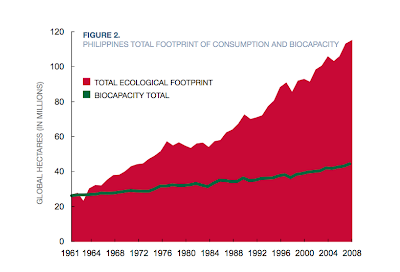
Description automatically generatedReduce your ecological footprint. The country's supply of natural capital (biocapacity) is lower than the population's demand (ecological footprint). Thus, the Philippines has been on an ecological deficit since the 1960s. Our strategy under the new normal should include the "surgical operation" that Atty. Tony Oposa has been advocating -- CPR! This means conserving, protecting and restoring our life systems or natural resources. Some of the ways by which we can practice this life skill is by reducing, reusing and recycling products through zero waste management. Another way is by doing plant-based diet --more food derived from plants and less from animal products.

Practice ecocycle thinking. This is a higher form of life skill that builds on the previous ones. The reference document is nature itself and her laws. Francis Bacon said that "nature to be commanded must first be obeyed." Barry Commoner rephrased this as "nature knows best" in his four laws of ecology. Just as nature recycles every single drop of water, human beings should learn biomimicry to solve human problems. This life skill demands that the materials that society produces should be assimilated by the environment without damaging the natural capacities and services. It also challenges people to use more renewable resources and less non-renewable resources, to avoid stock wastes that require "garbage cemeteries" or landfills, as well as to turn away from a throw-away society that is driven by unbridled consumerism. 

Be a green consumer. Being a green consumer or a green purchaser is a life skill that requires a mindset that favors green products, eco products, products with green labels, organic products or products that have the lowest possible carbon dioxide equivalent footprint in the entire life cycle. As a sustainable consumer, one should avoid "willful ignorance" in choosing and buying items sold in the market place. Consumers have the power to influence the consumption and production patterns into something that approximate the infinity business model.

Invest in natural capitalOne can develop this life skill through gardening, natural farming, tree planting, rehabilitating coral reefs, etc. As a sustainable consumer, one can also say no to products that are derived from environmentally destructive activities. At the community level, this can be done through sustainable development approaches like agroforestry, organic agriculture, community forestry, and by protected areas management, such as establishing marine sanctuaries and ecotourism sites. Investing in biocapacity or natural capital is a strategy that complements the reduction in ecological footprint.

Tuesday, October 6, 2020

Life Skill: Compassion

by A. Salces Cajes, PhD

Compassion is hard to practice because our default mode is self protection. Anger occurs as the brain releases catecholamines that trigger a short-term burst of energy. J. Blair (2018) defines anger as “a response to a perceived threat to oneself or to another. It is a response to frustration”.

Anger is neither a pleasant experience nor a proper moment to make decisions. For sure, no one wants to work with an unpleasant person - the bearer of anger. To overcome anger, we redirect (not suppress) it. One way to redirect anger is by distraction — read a book, go to a beach, take care of your plants, or write a letter to the concerned person to express your frustration and then burn the paper or delete your file.

Another way is by reappraisal - listen, check the context, understand the events, etc. Reappraisal can help us become more compassionate. In the process we also train our brain — the supramarginal gyrus of our cerebral cortex — to differentiate our own emotional condition from that of other people. Thus, we have the power to manage anger and the capacity to practice compassion.

Let’s keep in mind Aristotle’s words of wisdom: “Anybody can become angry - that is easy, but to be angry with the right person and to the right degree and at the right time and for the right purpose, and in the right way - that is not within everybody's power and is not easy.”

Thursday, September 24, 2020

Life Skill: Personal Code of Conduct

 A. Salces Cajes, PhD

Also known as the moral code, code of honor, ten commandments or decalogue, the personal code of conduct states the ethical norms that guide you in deciding which decision or action is right or wrong. Such ethical norms represent the standards or ideals that you set for yourself. 

Your code serves as the terms of reference for your conscience when it makes an evaluation about the rightness or wrongness of an action, decision or behavior. If your code is consistent with your credo and values, then you gain confidence in the quality of your choices and actions.

Since your code represents the most sacred character of your being, it has a normative function --it regulates your conduct. In case you  violate your code, your conscience can trigger you to stop, repent or take a positive or affirmative action. It tells you to say sorry or repay an injury that has been done.

If there is such thing as honor among thieves, the right thing to do is for good men and women to have a superior set of moral compass to make this world or our communities, organizations, and homes better places to live in. 

Some examples of a code of conduct include the following:
  • I shall abide by the principle of beneficence or ahimsa by doing good and avoiding evil;
  • I shall protect my personal integrity at all times;
  • I shall observe zero tolerance to corruption;
  • I  shall treat and respect other people as my kapwa.
The True Decalogue by Apolinario Mabini is good source of a code of conduct:

First. Love God and your honor over all things: God, as the source of all truth, all justice and all activity; your honor, the only power that obliges you to be truthful, just and industrious.

Second. Worship God in the form that your conscience that God speaks to you, reproaching you for your misdeeds and applauding you for your good deeds.

Third. Develop the special talents that God has given you, working and studying according to your capabilities, never straying from the path of good and justice, in order to achieve your own perfection, and by this means you will contribute to the progress of humanity: thus you will accomplish the mission that God himself has given you in this life, and achieving this, you will have honor, and having honor, you will be glorifying God.

Fourth. Love your country after God and your honor, and more than you love yourself, because your country is the only paradise that God has given you in this life; the only patrimony of your race; the only inheritance from your ancestors; and the only future of your descendants: because of your country you have life, love and interests; happiness, honor and God.

Fifth. Strive for the happiness of your country before your own, making her the reigning influence for reason, justice and work; if your country is happy, you and your family will also be happy.

Sixth. Strive for the independence of your country, because you alone can have a real interest in her aggrandizement and ennoblement, since here independence will mean your own freedom, her aggrandizement your own perfection, and her ennoblement your own glory and immortality.

Seventh. In your country, do not recognize the authority of any person who has not been elected by you and your compatriots, because all authority comes from God, and as God speaks to the conscience of each individual, the person chosen and proclaimed by the consciences of all the individuals of a whole town is the only one that can exercise real authority.

Eighth. Strive that your country be constituted as a republic, and never as a monarchy: a monarchy empowers one or several families and lays the foundation for a dynasty; a republic ennobles and dignifies a country based on reason, it is great because of its freedom, and is made prosperous and brilliant by dint of work.

Ninth. Love your neighbor as you love yourself, because God has imposed on him and on you the obligation to help one another, and has dictated that he does not do unto you what he does not want you to do unto him; but if your neighbor is remiss in this sacred duty and makes an attempt on your life, your freedom and your priorities, then you should destroy him and crush him, because the supreme law of self preservation must prevail.

Tenth. Always look on your countryman as more than a neighbor: you will find in him a friend, a brother and at least the companion to whom you are tied by only one destiny, by the same happiness and sorrows, and by the same aspirations and interests.

Because of this, while the borders of the nations established and preserved by the egoism of race and of family remain standing, you must remain united to your country in perfect solidarity of views and interests in order to gain strength, not only to combat the common enemy, but also to achieve all the objectives of human life. (http://malacanang.gov.ph/8132-the-true-decalogue-by-apolinario-mabini/)

Tuesday, September 22, 2020

On Human Rights

by A. Salces Cajes, PhD

The concept of human rights is usually traced to the year 539 BC when Cyrus the Great declared the freedom of the slaves saying that all human beings are equal in race and that they could choose the religion to believe in and practice. Indeed, it has a long and tumultuous history, but some countries are able to advance and protect human rights better than others.

So, what are human rights and why are they important?

Human rights are ultimately derived from the natural wants of human beings. The natural wants are inalienable and fundamental to every person. An act to deny the fulfillment of such natural wants would dehumanize a person. 

People, for instance, will not survive for a long time without water to quench their thirst. Thus thirst is a natural desire and quenching the thirst is a natural want. When someone denies the fulfillment of this natural want, the person will eventually die or cease to exist as a person. If someone limits access to water, then the affected persons will not be able to fully develop and realize their potential. In the process, they will become weak, unhealthy, susceptible to disease, and their mental development is affected; hence unable to make intelligent or wise decisions.

Natural wants are needs, and needs are part of our being. But some needs are more important than others, as thinkers like Abraham Maslow suggests. Others think that needs are fundamental and interrelated, and that there are needs that are common to all people regardless of time, race or place.

Through the State, the human needs are positively recognized and protected; hence, these human needs become human rights. Some States, however, are better than others in formulating and implementing the policies and laws to protect and promote human rights.

"Right" in Pilipino means karapatan. This implies something that is due to a person (nararapat), which a rational person is duty bound or morally obliged to fulfill (dapat tuparin). In Visayan, "right" means katungod that also implies a duty or moral obligation (katungdanan) to fulfill.

The idea that some rights are more important than others is generally acceptable. The challenge is how to operationalize or live out the reality that there are different types, limitations and possible conflicts of human rights.

Friday, September 18, 2020

Life Skill: Statement of Core Values

by A. Salces Cajes, PhD

Your statement of core values naturally flows from the credo. Values are the bases by which you distinguish the right from wrong action. The core values are your “non-negotiables” regardless of the circumstance, time or place. As such, values can be understood as the ethical foundations of human actions, intentions and decisions.

One way of determining your core values is by listing down the major actions or decisions you have made in your life. Review the list and then identify the reasons why you choose such actions or decisions. These reasons are manifestations of your values, i.e., why you do the things you do.

Core values can help students in deciding the kind of future that they will create, the profession that they would like to pursue, or the organization that they would like to work for after graduation. For professionals, core values are determinants in choosing your lifestyle, workstyle, advocacy or friends.

Inventory of Core Values. Come up with a list of three to seven core values or your “non-negotiables”. Describe these core values so that they are clear to you and for other people. Make sure that these values are consistent with your credo. Examples of core values are the following:

· Catholic values: Sanctity of life; Fidelity in relationship

· Mulan (the Movie): Honor; Duty

· Knights (of King Arthur): Courage; Justice

· Leadership: Integrity; Empathy

· Islamic values: Honesty; Kindness

· Filipino values: Hospitality; Loyalty.

 Describe the Core Values.  By describing the core values, you articulate the meaning and implication of these values to yourself and to other people. Examples of descriptions of core value are the following:

·  Jose Rizal, Patriotism: "I wish to show those who deny us Patriotism that we know how to die for our country and convictions."

·  San Miguel Corporation, Sustainable Development: “We advocate sustainable development - We believe in using only what we need and integrating sustainability practices into our operations. Water stewardship, energy optimization and reducing waste are our key environmental priorities.”

·  Author, Obedience or Loyalty: “I will obey and follow the right management instructions to the best of my abilities. I will refuse and oppose instructions that my conscience could not accept.”


Saturday, September 12, 2020

Life Skill: Personal Credo

by A. Salces Cajes, PhD

A personal credo is a set of beliefs guiding your thoughts, behavior, and attitude. It may also consist of principles to live in life. The credo can be distilled from your faith, culture, tradition, upbringing, lessons gained, and experiences.

A credo is important because it serves as one's center of being. When you are exposed to different individuals, groups, experiences and ideas, you will also become susceptible to beliefs and principles that are different from your own.

"Find your center" is a healthy reminder when you are unsure about the decision to make or the action to take. This is especially true when you are confronted with options or temptations that will affect your future. 

In the end, you will have to live and deal with yourself. So, make sure that your personal credo is grounded on ideas and ideals that are consistent with the best available sources of knowledge and wisdom. As a quote, which is attributed to the Vedas, say: "At the center of our being is a truth that shines brighter than a thousand suns."

You may refer to the examples below in crafting your personal credo.
  • I believe in karma -- that good and bad actions will respectively yield positive or negative consequences to me in the near or far future. -- Author
  • I believe in the inherent goodness of human beings, the beauty of our planet and her creatures, the grandeur of the universe and the wisdom of the Creator. -- Author
  • I believe that life has meaning and my search for that meaning challenges me to live life to the fullest. -- Author 
  • I believe that someday people will "live in a nation where they will not be judged by the color of their skin but by the content of their character." -- Martin Luther King, Jr.
From time to time, you need to revise or enhance your personal credo. In my case, I do it at least every year, each time I am facing a major decision to make, or when I read something that catches my attention. This poem entitled "To Have Succeeded" by Ralph Waldo Emerson is a good source of a personal credo:

To laugh often and much; To win the respect of intelligent people and the affection of children; To earn the approbation of honest critics and endure the betrayal of false friends; To appreciate beauty; To find the best in others; To give of one's self; to leave the world a bit better, whether by a healthy child, a garden patch or a redeemed social condition; to have played and laughed with enthusiasm and sung with exultation; to know even one life has breathed easier because you have lived -- this is to have succeeded."

Monday, September 7, 2020

Life Skills

by A. Salces Cajes, PhD


Life Skill refers to the right combination of knowledge, skill, attitude, and behavior that will help a person in coping with what the World Health Organization (WHO) describes as the "demands and challenges of everyday life." In Filipino, it simply means "Kakayahang Mamuhay". The context is right or proper living or "mamuhay ng maayos, mabuti at matiwasay". These terms, of course, need to be properly defined. But at this point, let's just use these terms as we know them -- i.e., not in the bad sense.

As I gain experience and knowledge, including hopefully wisdom, I'm sharing some insights on Life Skills that anyone can apply in their respective professional or life journeys. The articles about this topic will be simpler and personal. The "label" is "life skills" for easy reference.

Most of the lessons that I've gained are products of my reading, studies, interactions with experts and ordinary human beings, training programs, professional experiences, etc. Let me then share with you some of the life skills that I've learned and gained with the hope that these may help you in coping with the demands and challenges that may come along your way.

In relation to this topic, my related professional experiences include managing programs and projects for more than 25 years, leading people for about the same number of years, conducting organizational studies, running training sessions on strategic, operational, and risk management for the public, private an civil society sectors. I have also served as assessor of the Philippine Quality Award for a couple of years.

Caveat: Let's learn from others, but let's think and act for ourselves.


Monday, June 8, 2020

Weber’s Theory of Social Class

by Alan S. Cajes, PhD
Max Weber, 1918.jpg
Source: https://en.wikipedia.org/wiki/Max_Weber

A social structure has different dimensions, namely, class, status, and power. These dimensions are key factors that cause social differences or social stratification. Social class refers to people who have similar economic interests. There are four social classes that serve as the means for people belonging to such class to gain a position in life or to attain satisfactions. Status is a recognized level of social esteem that can be ranked as high or low based on the status of other people. It can be positive or negative in its evaluation and consequences to people. Power is understood as organized power through a party. A party as organized power can refer to a political party, labor organization, business council, NGOs or professional association. A party holds and exerts influence in society.

The Weberian concept of a social class is a reaction and an extension to the Marxist theory of a social class that is mainly defined in economic terms. For Weber, social classes are not just defined by the presence or absence of private property, and the means and factors of production. People are not simply rich or poor, exploited or exploiter, proletariat or bourgeoisie. Weber did not remove the Marxist concept of social class from the equation. He recognized it, and then extended it. 

For Max Weber (1864-1920), a social class implies a group of people having similar economic needs, expectations, and interests. There are four social classes, namely, the privileged class (people who own property and have education), the intelligentsia (those with no property), the petty bourgeoisie (the farmers, shopkeepers, professionals), and the working class.

Class differences are factors in stratification in the sense that one can distinguish a higher class from a lower class. Similar to classes, status or the “effective claim to social esteem” can also be ranked as high or low based on the status of other people. It can be positive or negative in its evaluation and consequences to people. Although status could cut across social classes, it is usually the people who have high status who also belong to the higher classes. Moreover, organized power or party is a factor in social stratification. Just like status, party can cut across social classes. However, it is usually the privileged class who hold organized power.

Levels of social class, status, and party may differ from one person to another or from one society to another, but economic power (held by the privileged class) usually goes with organized power and high esteem or status. Social stratification should therefore be analyzed using the shades or dimensions of a social structure not just purely on Marxist economics.

Reference: 

Weber, Max, 1978, Economy and Society (2 vols) (edited by Guenther Roth and Claus Wittich) Berkeley: University of California Press.